

L'Agente AI per il Customer Service e il Supporto Aziendale
Margot è l’agente speciale AI che rivoluziona il tuo lavoro automatizzando i processi aziendali.

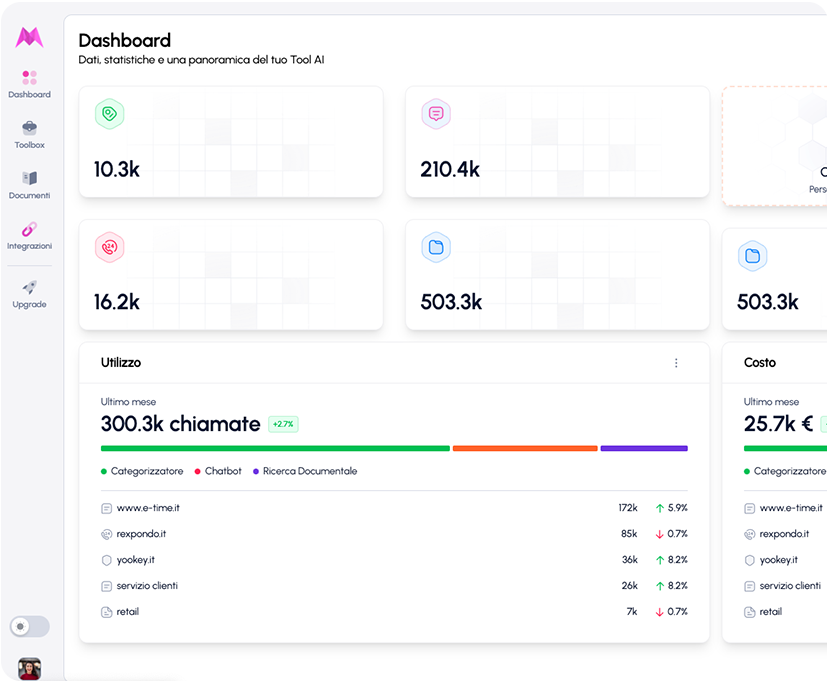
Riprenditi il tuo tempo: automatizza il
Customer Service con l'AI
Semplifica l'assistenza verso l'esterno e ottimizza il lavoro interno.
Ottimizza la gestione del tempo
Elimina il carico di lavoro manuale sulle richieste ripetitive e libera il tempo del tuo team per attività a valore.
Riduci i costi operativi
Abbatti le spese di gestione del supporto senza dover ampliare l'organico per gestire volumi maggiori.
Integralo con i tuoi strumenti
Nessuno stravolgimento: colleghi Margot ai tuoi sistemi di Helpdesk, CRM e Ticketing in pochi passi.
SELEZIONA UN MODULO
Tutti gli strumenti AI di Margot al servizio del tuo business
Un'AI avanzata, dotata di un portafoglio di strumenti all'avanguardia, per offrirti un servizio completo e personalizzato.
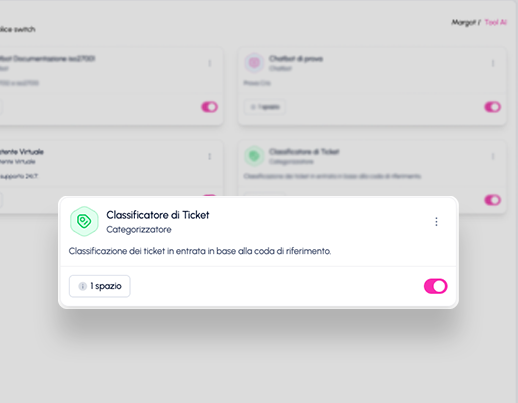
CLASSIFICATORE
Categorizza le richieste in tempo reale
L'Agente AI propone la classificazione migliore in base al contenuto del messaggio inviato da parte del cliente
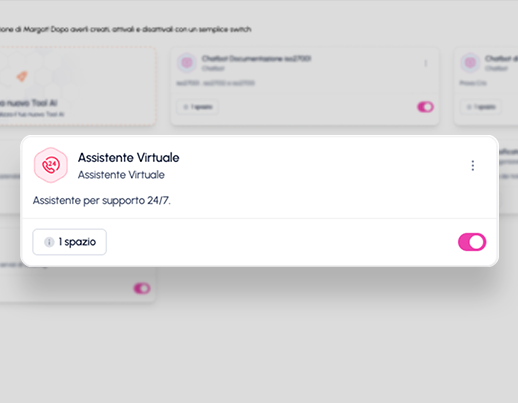
ASSISTENTE VIRTUALE
Trova la risposta migliore alle tue domande
Propone la risposta migliore basandosi sul messaggio attuale o sui precedenti
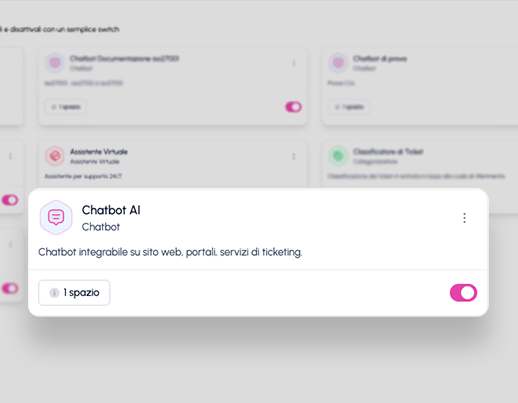
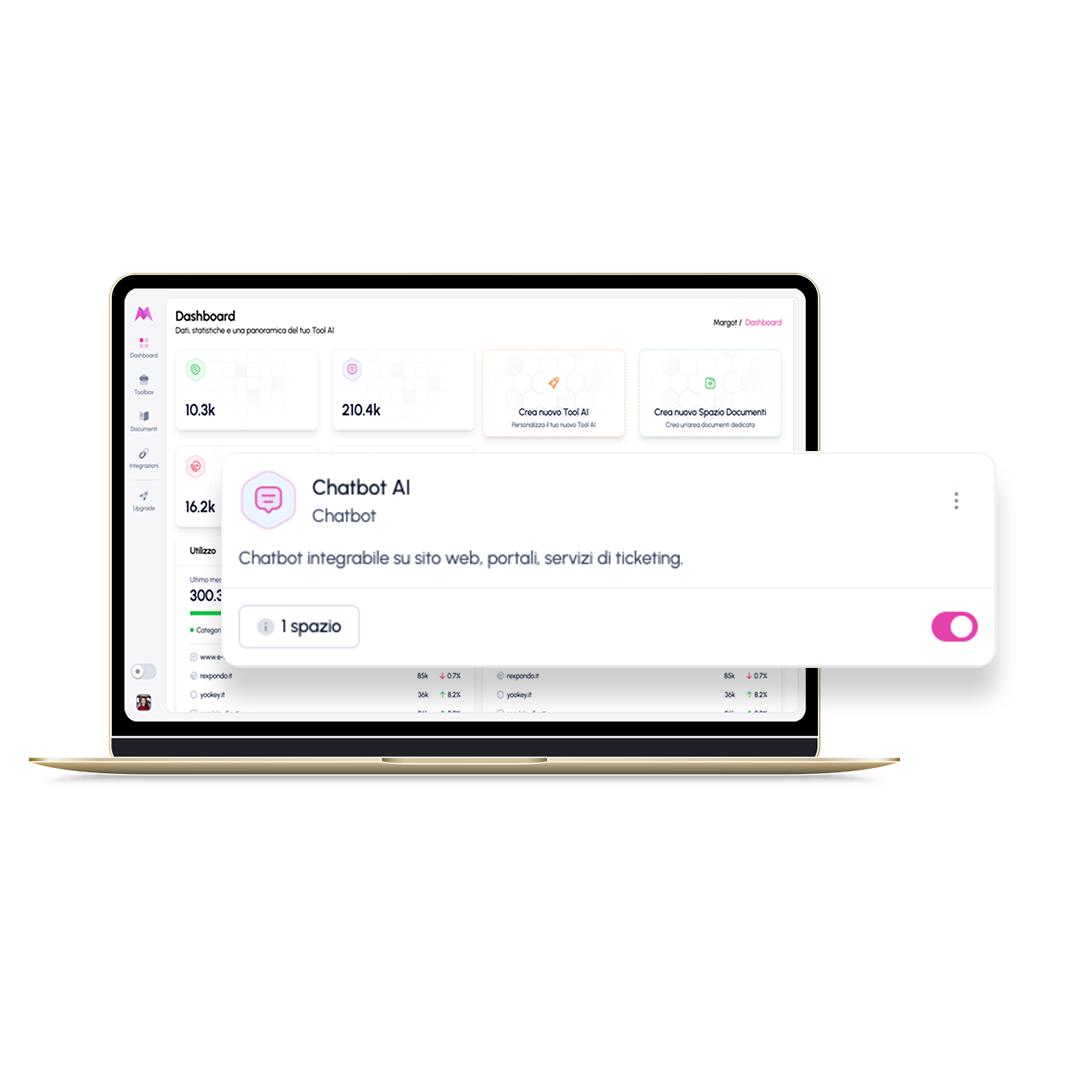
CHATBOT
Scopri le Potenzialità di un Chatbot AI
Questo tool di Margot garantisce automazione, personalizzazione ed efficienza nel servizio offerto
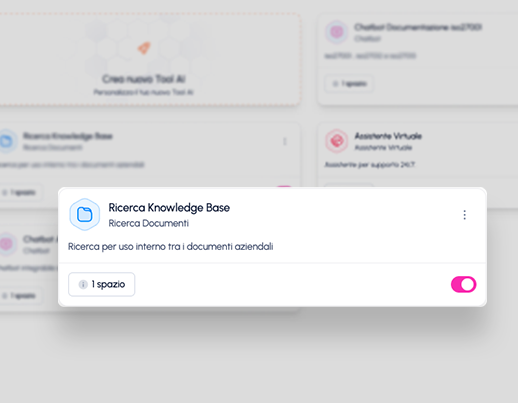
KNOWLEDGE BASE
Trova subito le informazioni che cerchi
L'Agente AI ricerca tra i documenti aziendali quello che viene richiesto dagli utenti in modo veloce ed efficace
INTEGRAZIONE & HELPDESK
Integrazione AI con il tuo Sistema di Helpdesk e Ticketing
Margot si integra fluidamente con le principali piattaforme di supporto, trasformando il tuo sistema di ticketing in un ecosistema intelligente basato sull'AI.
VANTAGGI
Quanto risparmieresti con l'utilizzo della nostra Agente AI?
Ti aiutiamo nell'analisi delle tue necessità
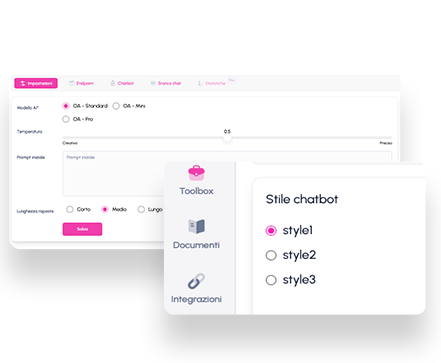
AUTOMAZIONE
Potenziare i modelli grazie all'automazione
Implementa la soluzione di Retrieval-Augmented Generation

PROTEZIONE
Con Margot la tua Privacy è al sicuro
La protezione della privacy ci permette di costruire un rapporto di fiducia con i nostri partner e i nostri clienti
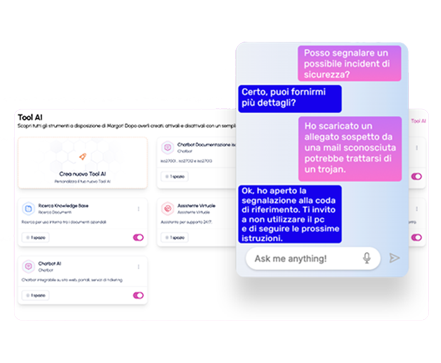
POTENZIALITÀ
Sviluppa i processi e migliora le performance
Riduci i tempi di attesa e ottimizza il servizio
WORDPRESS PLUGIN
Il plugin Margot per potenziare WordPress con l’AI
Il plugin AI ottimizzato che opera come ponte intelligente tra WordPress e Margot
INTEGRAZIONI
Scegli di integrare Margot
Integra il nostro Agente AI con i tuoi sistemi aziendali.
Sfrutta al massimo la sinergia tra i tuoi sistemi grazie a Margot
ELEMENTI CHIAVE
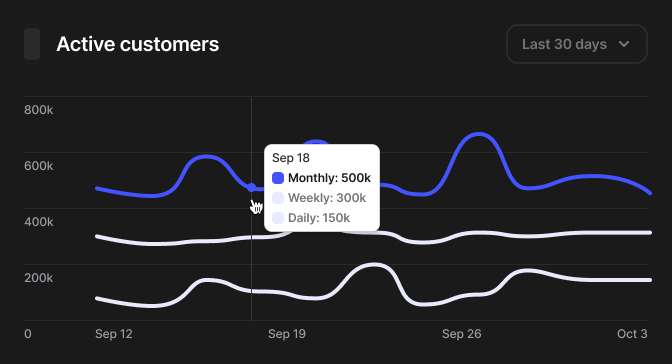
Una piattaforma completa
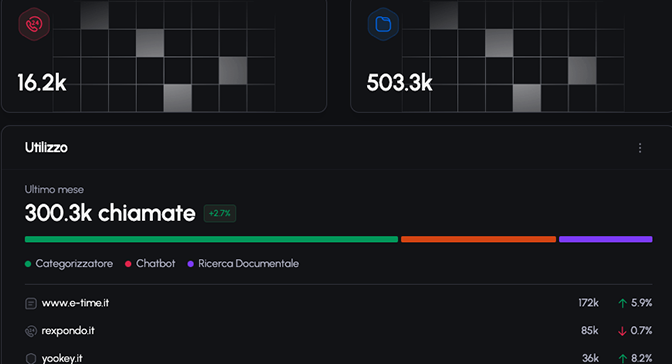
Monitora le interazioni, riconosci i punti critici e intervieni per migliorare l'esperienza degli utenti
Reportistica
Analizza i dati delle interazioni
per migliorare i processi aziendali
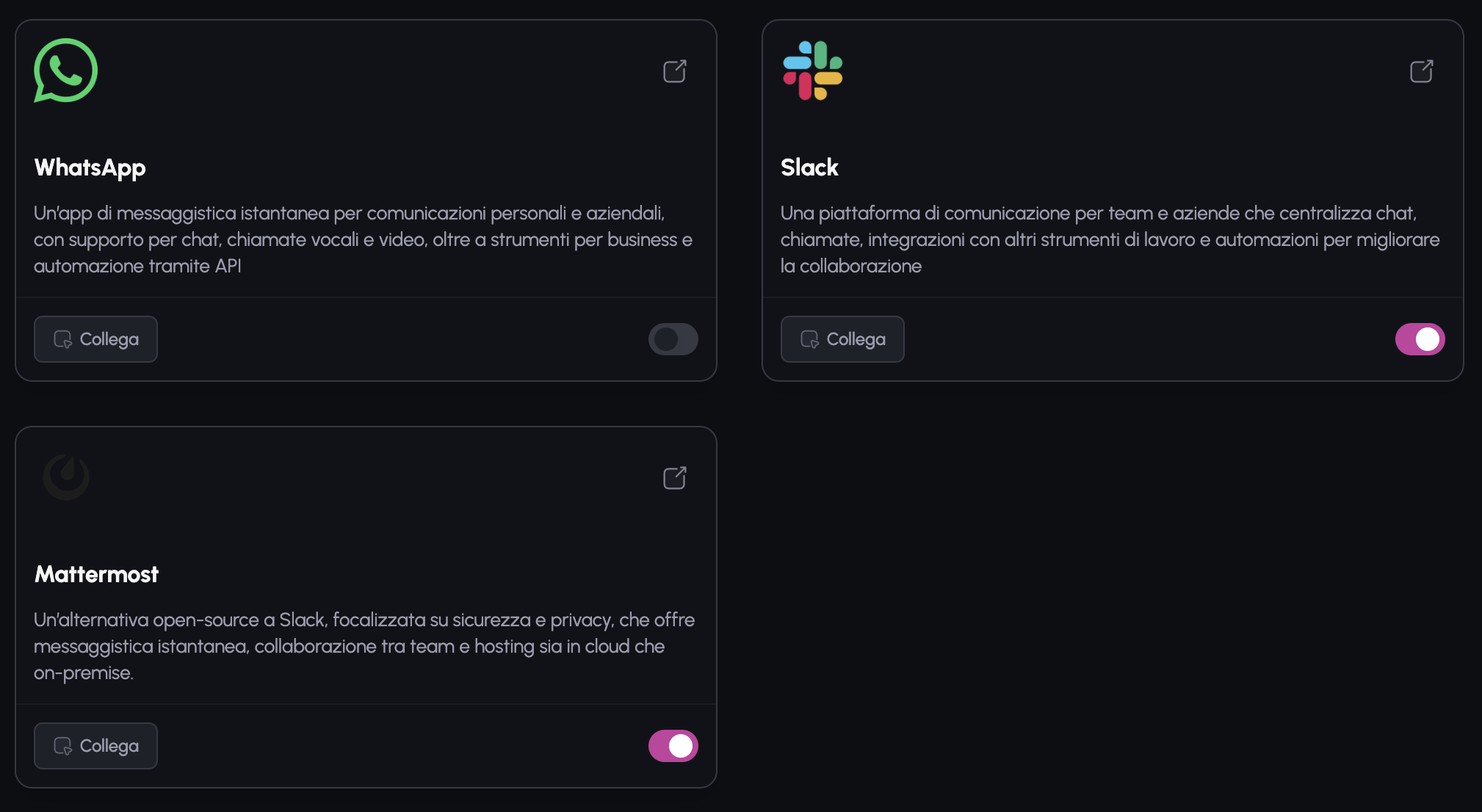
Multicanalità
Gli Agenti AI garantiscono una comunicazione multicanale fluida e completa tra le diverse piattaforme
Sistema Cognitivo con Integrazione RAG
Il RAG va oltre i limiti dei modelli tradizionali, fornendo risposte più precise e personalizzate in base alle esigenze specifiche del cliente.
Multilingua
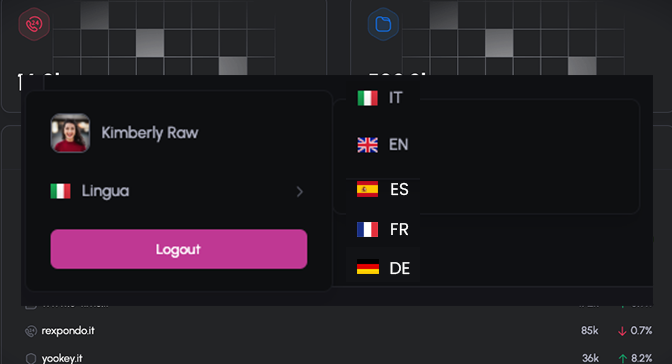
Gli Agenti AI parlano la tua lingua

Richiedi una demo e prova tutte le funzionalità della piattaforma.